
Scaling the High Frontier: The Engineering Logic Behind China’s 10,000-Satellite Constellation
The latest technical disclosures from the Ministry of Industry and Information Technology (MIIT) signal a massive acceleration in China’s satellite internet infrastructure, moving from trial phases to large-scale engineering. While a trial constellation of just eight satellites already demonstrates smooth high-definition video streaming, the real "ROI" for the digital economy lies in the planned deployment of over 10,000 low Earth orbit (LEO) satellites. This scale is a mechanical necessity to achieve a 100% duty cycle of stable, continuous broadband coverage, eliminating the "brief windows" of connectivity that currently limit satellite-to-phone applications.
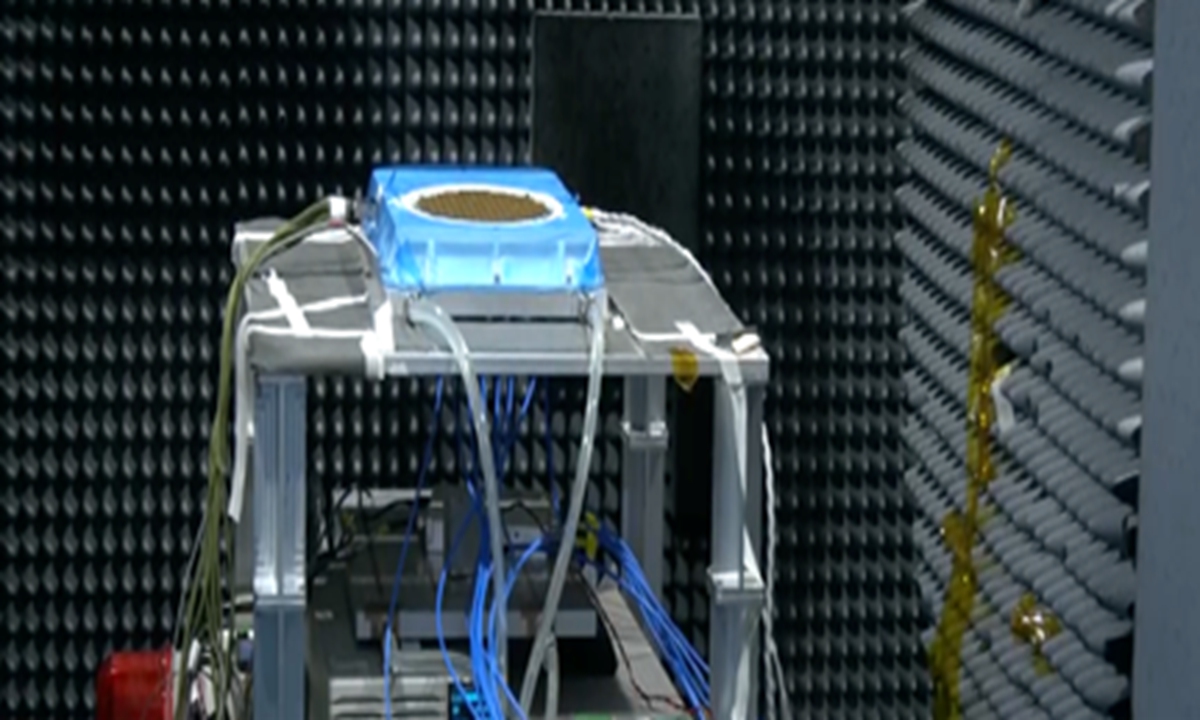
The engineering breakthroughs facilitating this are centered on the phased array antenna—a golden panel that acts as the satellite's primary communication payload. Because LEO satellites travel at a staggering velocity of 7.8 kilometers per second, traditional mechanical steering is obsolete. Instead, these phased array systems utilize millisecond-level beam switching to maintain links with ground users. By equipping a single satellite with three to four antennas, the system increases its concurrent user capacity and signal density exponentially. According to People's Daily, this hardware is already being deployed in batches, serving as the foundational information infrastructure for the 6G era and the burgeoning low-altitude economy.
Beyond the antenna, the "information highway" of this network is the inter-satellite laser link. These laser beams, thinner than a human hair, enable a multimodal relay system that forms a closed-loop communication chain. In April 2026, the successful combination of inter-satellite laser links and satellite-ground microwave links marked a major verification of the integrated networking architecture. This system effectively bypasses the 70% of the Earth's surface—oceans, deserts, and remote airspace—that currently lacks 4G or 5G coverage. By establishing an integrated space-based optical transport network, the architecture targets a latency reduction that will allow for real-time emergency response and seamless IoT connectivity across all geographic coordinates.
The commercial and strategic implications are clear: securing space-based communication resources is a race for strategic spectrum and orbital slots. With current technologies validated, experts predict that high-speed satellite-to-ground laser links could be in practical, commercial use within a three-to-five-year cycle. This timeline suggests that by 2030, the "space-ground network" will transition from a technical novelty into a robust, high-bandwidth utility. For the global market, this means a new tier of connectivity that offers a price-to-performance ratio capable of disrupting traditional telecommunications, especially in sectors like maritime logistics and aviation where reliable, high-speed data has historically carried a prohibitive cost.
News source: https://peoplesdaily.pdnews.cn/china/er/30051996854
Need a guaranteed cash offer on your KC home?
Tell us about the property. Most homeowners receive a written offer within 24 hours — and we close on the date you choose.
Get My Guaranteed Offer